

Publishing destinations
Where finished articles go: WordPress, WooCommerce, Webflow, Shopify, Framer, Wix, Ghost, HubSpot, Notion, Strapi, a GitHub repository for sites built from code, your own Next.js site via the Headless API, or any HTTP endpoint via a webhook.
Analytics sources
Where performance data comes from: Google Search Console and Google Analytics 4.
Where to find them
Open your workspace, then Project Settings → Integrations.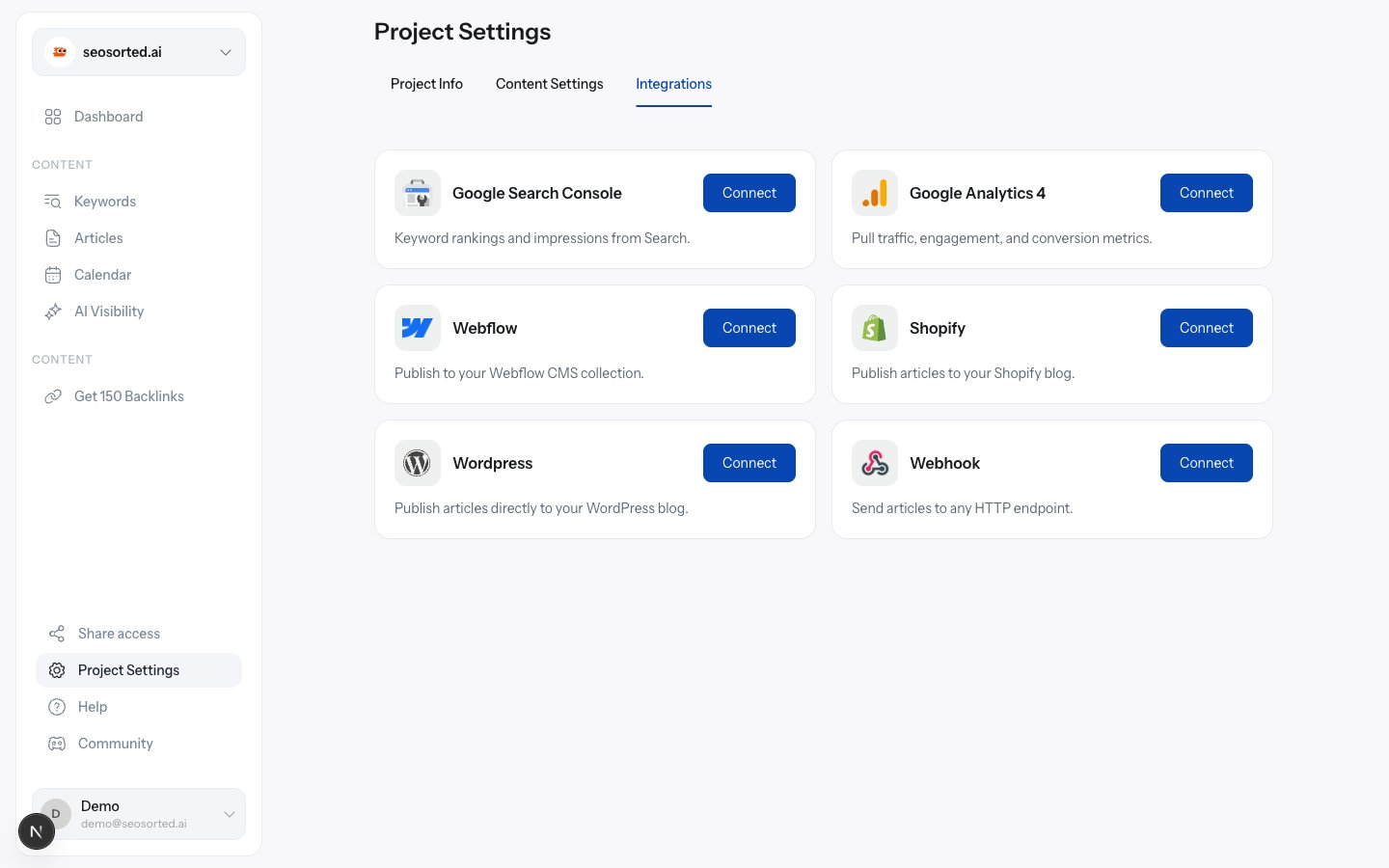
Project Settings → Integrations, before anything is connected
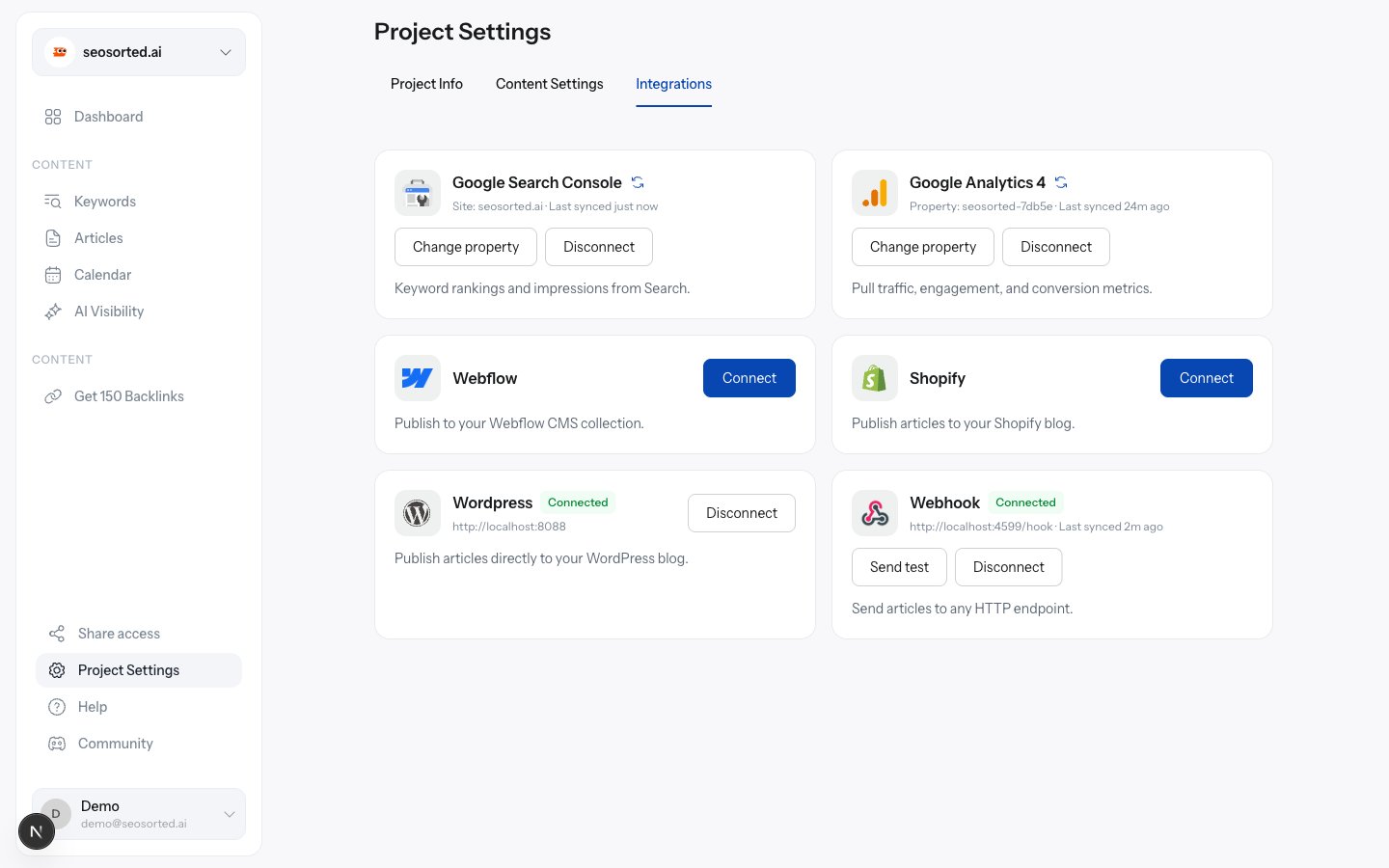
Connected cards show what they point at and when they last synced
Search Console and Analytics cards also have a ↻ icon next to the name for an on-demand sync.
A connector whose credentials stopped working — expired, revoked, or a webhook that kept failing
— shows Retry instead of the menu. Retry starts the connection again so you can enter fresh
credentials.
What you need before you start
Admin access to the workspace
Admin access to the workspace
Only workspace Admins and Owners can connect or disconnect. Editors can publish to
a connector that already exists.
Admin access on the other side
Admin access on the other side
You need an account that can create content on the destination — a WordPress user who can
publish posts, a Webflow site whose settings you can open to generate an API token, a Shopify store you can create apps for, a
Ghost or Strapi administrator, a HubSpot Super Admin.
A paid plan for scheduled publishing
A paid plan for scheduled publishing
Connecting and publishing by hand work on any plan. Publishing on a schedule needs an
active paid plan when the scheduled time arrives.
One connector per kind, per workspace
A workspace holds at most one connector of each kind. Connecting WordPress again replaces the stored credentials rather than adding a second site. To publish to two WordPress sites, use two workspaces.Disconnecting
Open the card’s ⋮ menu, choose Disconnect, and confirm. The dialog spells out what stops working.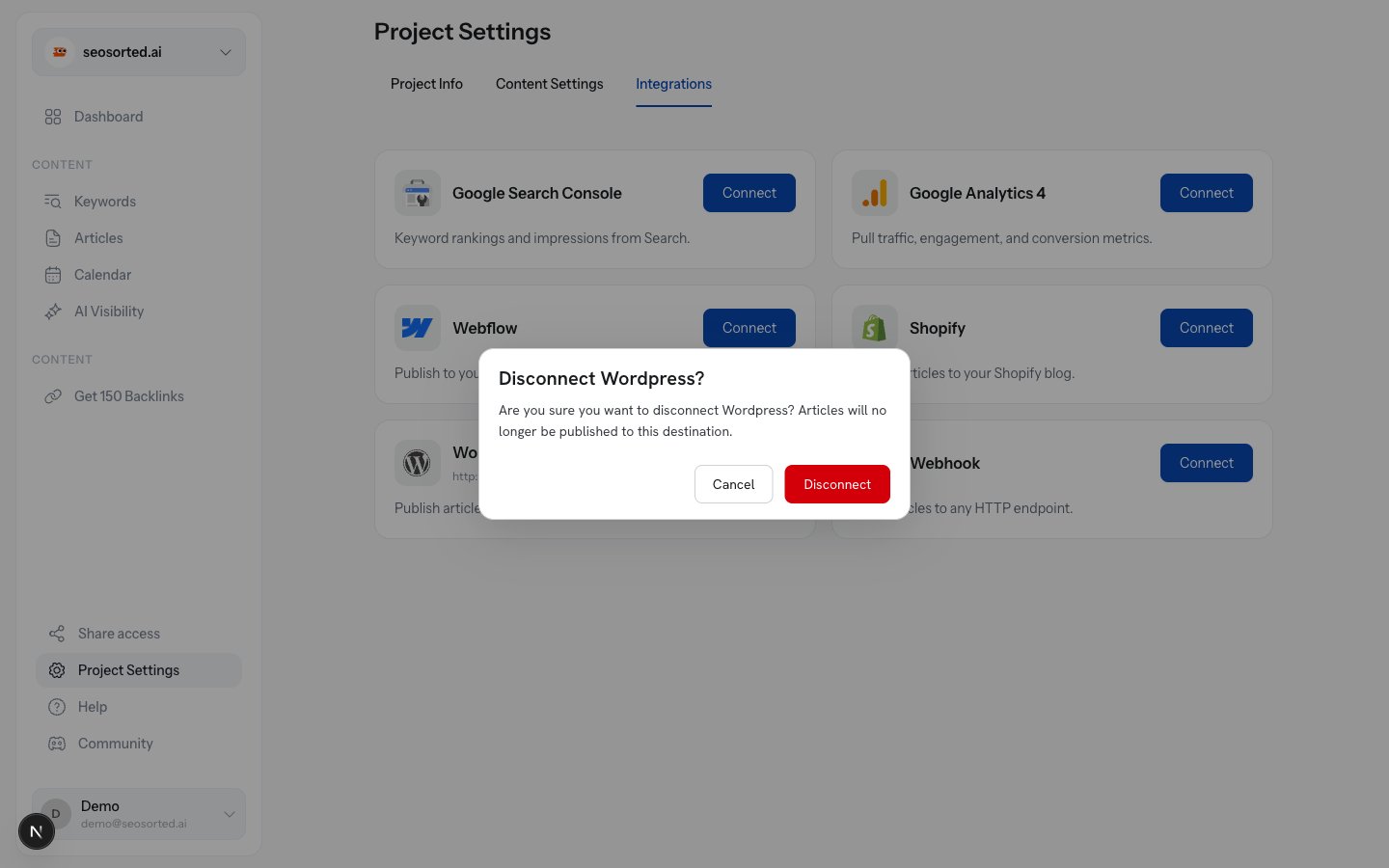
Disconnecting asks for confirmation and names the consequence